


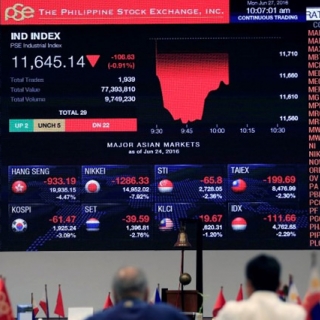
Asian stocks slipped at the open on Friday (November 7), following a choppy session on Wall Street. The MSCI Asia Pacific Index fell about 0.2%, led by losses in Japan, while South Korea and Australia also edged lower. In the US, the S&P 500 fell 1.1% and the Nasdaq 100 slumped 1.9% for the second time in three sessions, as AI stocks from Nvidia and Palantir sold off. The volatility indicator briefly touched 20, reflecting growing market anxiety.
In bonds, Treasury prices edged lower early in the Asian session after a strong rally earlier, when the 10-year yield posted its biggest daily drop in a month on a surge in October job losses. On the currency side, the Bloomberg Dollar Index was flat after its steepest decline since mid-October, while Fed officials' hawkish tone on inflation curbed speculation of premature interest rate cuts.
Globally, the MSCI All Country World Index headed for its first weekly decline in four weeks. Investors who had previously driven the rally on hopes of rate cuts and the AI growth theme are now questioning the outcome of the sector's massive capital spending. The lack of official data due to the US government shutdown has left markets reliant on private sector releases: Challenger, Gray & Christmas reported 153,074 layoffs in October—nearly triple the figure a year ago—the highest for an October since 2003, fueling views that the Fed needs to be more cautious, although financial markets now price the chance of cuts next month at over 70%.
In equities, the focus on the funding needs of OpenAI and a number of other AI companies has further weighed on sentiment—the Nasdaq 100 is now nearly 4% below its October 29 high, though still up 20% since the start of the year. On the policy front, the US has proposed lifting tariffs on certain shipbuilding equipment imports from China. Meanwhile, in commodities, oil edged higher but remains headed for a second weekly decline due to concerns about a global oversupply. (az)
Source: Newsmaker.id
Tested EN...
Asian stock markets weakened for the second consecutive day, indicating that the initial rally that had been "speedy" at the start of the year is starting to lose steam. At the same time, US governmen...
US stocks were mixed on Wednesday as investors weighed uneven economic data against expectations for eventual Federal Reserve easing, with the S&P 500 easing 0.2% and the Dow Jones sliding 0.8% fr...
European stocks were in mixed territory on Wednesday morning, as regional market jitters grow over U.S. President Donald Trump's threat to annex Greenland. The pan-European Stoxx 600 was little chang...
Asian stock markets weakened slightly on Wednesday after posting their best start to the year in history. The decline was driven by a decline in Japanese stocks amid escalating tensions with China. Th...
Oil prices stabilized on Thursday (February 12th), as the market reassigned a risk premium to US-Iran tensions despite US inventory data showing swelling domestic supplies. This movement confirms one thing: geopolitical headlines are still more...
Gold prices weakened slightly on Thursday (February 12th), as more solid US employment data reduced market confidence in an imminent Federal Reserve interest rate cut. The strong employment data prompted market participants to shift expectations of...
The Hang Seng Index reversed its downward trend in Hong Kong on Thursday (February 12th), weakening by around 0.9% to around 27,000 after a strong session earlier. This decline halted the momentum of the short term rally, as investors began to...